Home | Contact |
Check Valves | Regulator kits
Safety Valves

Air Compressor Safety Valve Leaking or Popping Open?
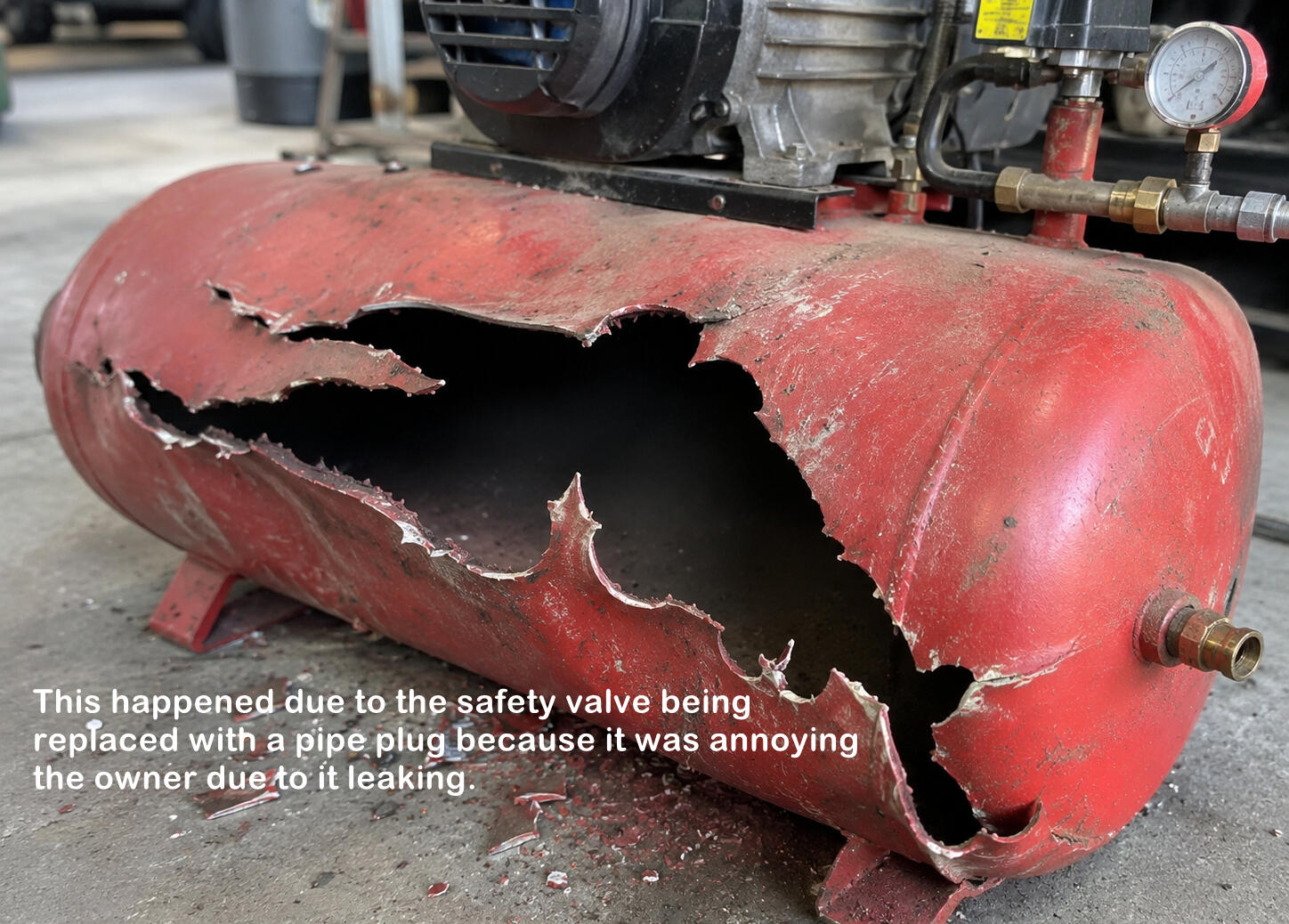
NEVER REPLACE A LEAKY SAFETY VALVE WITH A PLUG, EVEN TEMPORARILY!!
A safety valve is something that the manufacturer installs in an air compressor to prevent the tank from rupturing in the event that the control systems on the air compressor allow the air pressure to exceed the manufacturers maximum cut-out pressure.
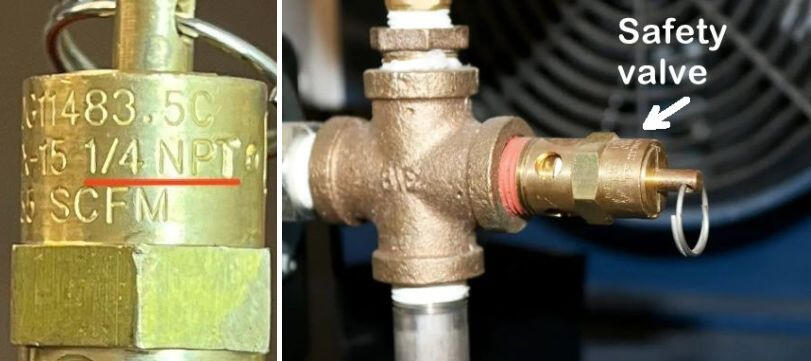
A tank safety valve is typically set at ~20lbs over the cut-out pressure of "most" air compressors.
The safety valve has a psi rating on the side of it. This will tell you the air pressure where the safety valve has been designed to release the air pressure inside of your air tank.What can cause a tank safety valve to discharge excess air?
1) If your pressure switch is defective, allowing the cut-out air pressure to be exceeded, then the safety valve does it's job by releasing this excess air.
2) The safety valve over time can become defective allowing air to release BEFORE the cut-out pressure is reached.
Where is the safety valve located?
The safety valve is typically located in one of several places.
-A multi-port manifold where the pressure switch is located.
-Directly on the air tank itself, typically near the top of the air tank.Typically it will have a test pull ring on the end so that you can test the operation of the safety valve.Proper test1) Bring the tank to normal cut-out pressure
2) Shut the compressor off
3) Put on eye protection
4) Stand clear of the discharge
5) Pull the ring briefly.
You should get a strong blast of air. Release it, and the valve should snap closed without continuing to hiss.Replace the valve when:-The ring will not move
-Little or no air comes out
-It sticks open
-It continues leaking after being exercised
-The body or spring is badly corrodedDo not oil it, adjust it, plug it, or replace it with a higher-pressure valve just to stop leakage. The ring is a test handle, not a pressure-release control you should routinely use to empty the tank. The bottom drain is still needed to remove condensed water.